

As he gets ready to release his first album in over five years, and embark on a grand tour, the renowned rock and style icon openly discusses topics that are close to his heart: family, faith, sex, love, and the lasting impact he wishes to leave behind.

The article has been written by Madison Vain, photographed by Norman Jean Roy, and styled by Matthew Henson. You can find the editorial digitally on Esquire.com.
LENNY KRAVITZ DOES NOT BLEND IN. WE’RE SITTING IN Bemelmans, the iconic piano bar at the Upper East Side’s historic Carlyle Hotel. Here, things are done properly. Have been since 1947. Waiters wear white coats. Cocktails, served exclusively in etched crystal glasses, arrive on silver trays. Fancy little bowls full of fancy little bar snacks adorn the tables. Murals by Ludwig Bemelmans—of the Madeline children’s book fame—decorate the walls. And some of the country’s most celebrated jazz pianists still play the black and whites nightly. It is a place completely synonymous with old-school New York City glamour. It’s also maybe the last place you’d expect to spot a certified rock god during daylight hours.
But this is where Kravitz wanted to meet, so here we are. It’s 3:00 P.M. on a very rainy Yom Kippur; the remnants of Tropical Storm Ophelia are battering Manhattan outside, and the sparser-than-usual crowd is almost entirely drinking martinis. Kravitz, who is staying at his daughter’s Brooklyn apartment while she’s holed up in his Paris home, looks like he beamed in straight from 1975. Tailored brown-leather jacket, turtleneck, flared trousers. His signature locks are pulled half back, and gold rings wrap around a few of his fingers. He orders a hot green tea.


Surprisingly enough, Kravitz is right at home at the Carlyle. This is where his mom, Roxie Roker, then an assistant at NBC and an aspiring actress, asked Bobby Short, the fabled cabaret singer who headlined here for decades, if she should accept the marriage proposal of a news producer who worked in her building named Sy Kravitz. (Replied Short: “I don’t see anyone else asking!”) When Lenny’s classmates were with sitters on Saturday nights, Short visited him and his parents at their table between sets. He met Andy Warhol here many years later at a party for Bret Easton Ellis. Kravitz even hosted his dad’s final birthday party here in the early 2000s. “This place is all over my life,” he says plainly.
Besides, has Kravitz ever blended in? The only son of Roxie and Sy, he is equal parts his mother, a Black woman of Bahamian descent, and his white, Jewish father, whose family came to America from Kyiv before Sy was born. Growing up biracial in the sixties and seventies, Kravitz stuck out as much in the largely white East Eighties of Manhattan as he did in the primarily Black Bed-Stuy, Brooklyn, where he lived during the week with his maternal grandparents while his parents worked in the city. It wasn’t a problem.

“I was comfortable,” says the man who, decades later, would push the boundaries of rock and fashion—the very definition of cool, even—into new frontiers. “I dug that.”
COLSON WHITEHEAD ONCE WROTE THAT everyone’s New York is the New York they first arrive in, that they begin building their own private skyline the moment they lay eyes on the city. Kravitz, fifty-nine, has arrived in Manhattan a few times, always welcomed by a different city. His parents had an apartment around the corner from the Metropolitan Museum of Art, on Eighty-second Street. He spent his middle and high school years in Los Angeles but returned in the late eighties when he moved in with his girlfriend, Lisa Bonet—Denise Huxtable herself. And a decade and a half later, after trying out both New Orleans and Miami, he came back with his and Bonet’s daughter, a then-teenage Zoë Kravitz.
Kravitz misses all of his past lives in New York for different reasons. But as Whitehead predicted, his true New York is the one that sitting here in Bemelmans brings him back to. The Upper East Side. After all, he says, it changes more slowly than perhaps any other neighborhood in the city. Lobel’s, his mother’s favorite butcher shop, remains around the corner from their old apartment. Their preferred café, E.A.T., is still just down the street. Of course, some things inevitably change. And like any New Yorker, Kravitz delights in recalling what a current building used to be. Example: The Nectar diner on Eighty-second and Madison was once the Copper Lantern, where young Lenny first learned to tie his shoes.
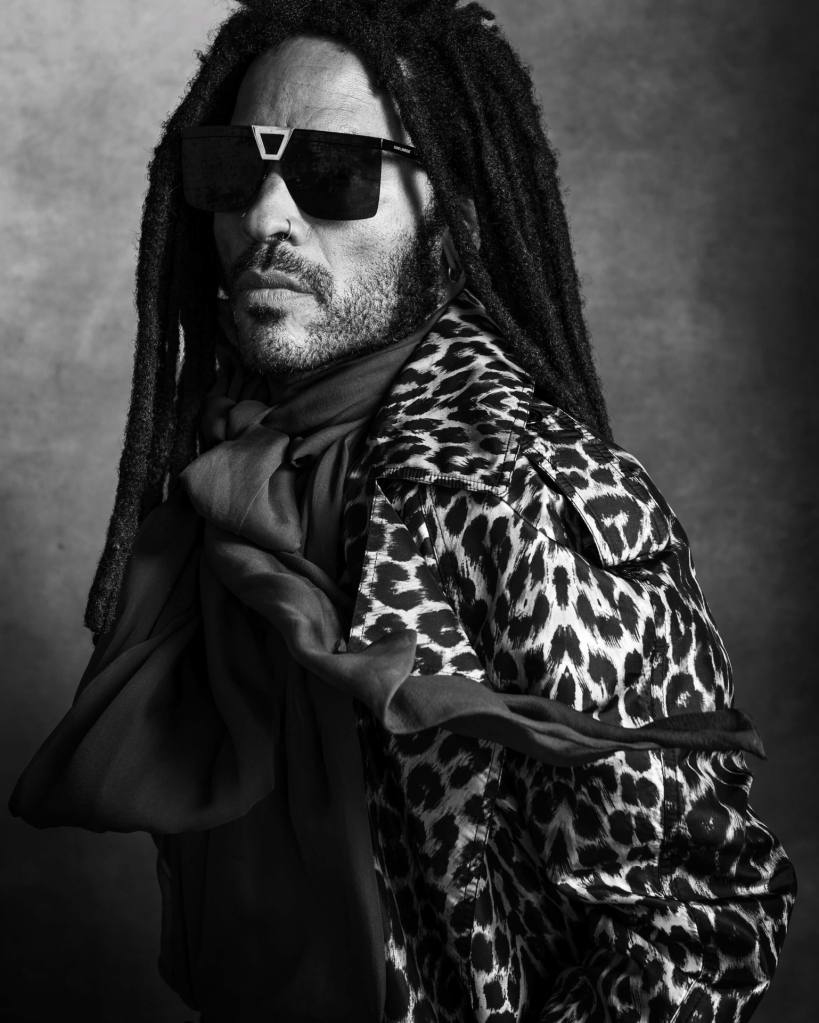
He rarely comes to town just to visit. It’s almost always for work, and this trip is no exception. When he’s in New York, he is typically in a constant state of motion—though you get the sense that Kravitz himself wouldn’t use the word work to describe his various ventures in interior design, philanthropy, and spirits. He’s just as busy as ever this week, but it’s in service of his first love. For the first time since 2018, he is on the verge of releasing new music: Blue Electric Light, a buoyant, occasionally blistering electro-funk collection, drops March 15.
Kravitz has long favored first-person storytelling in song, but on two of his recent releases he mainly looked outward. Black and White America (2011), brimming with Obama-era optimism, imagines life in the U. S. A. beyond the racial divide; Raise Vibration (2018) bears witness to the comedown, urging positivity as the necessary response to the divisive Trump tenure. With this new set, Kravitz’s attention has returned inward. His testimony to the power of self-love and personal evolution is searingly specific and at times downright anthemic. It also—and this is important—flat out cooks musically.
The arrival of Blue Electric Light marks the end of the longest span Kravitz has gone between albums since his 1989 debut, Let Love Rule. Ten records followed his first one, each dropping at a steady clip. The pandemic shutdown had a lot to do with the atypical five-year lag time. But Kravitz credits the isolation imposed by Covid with triggering a period of powerful creativity and reflection.
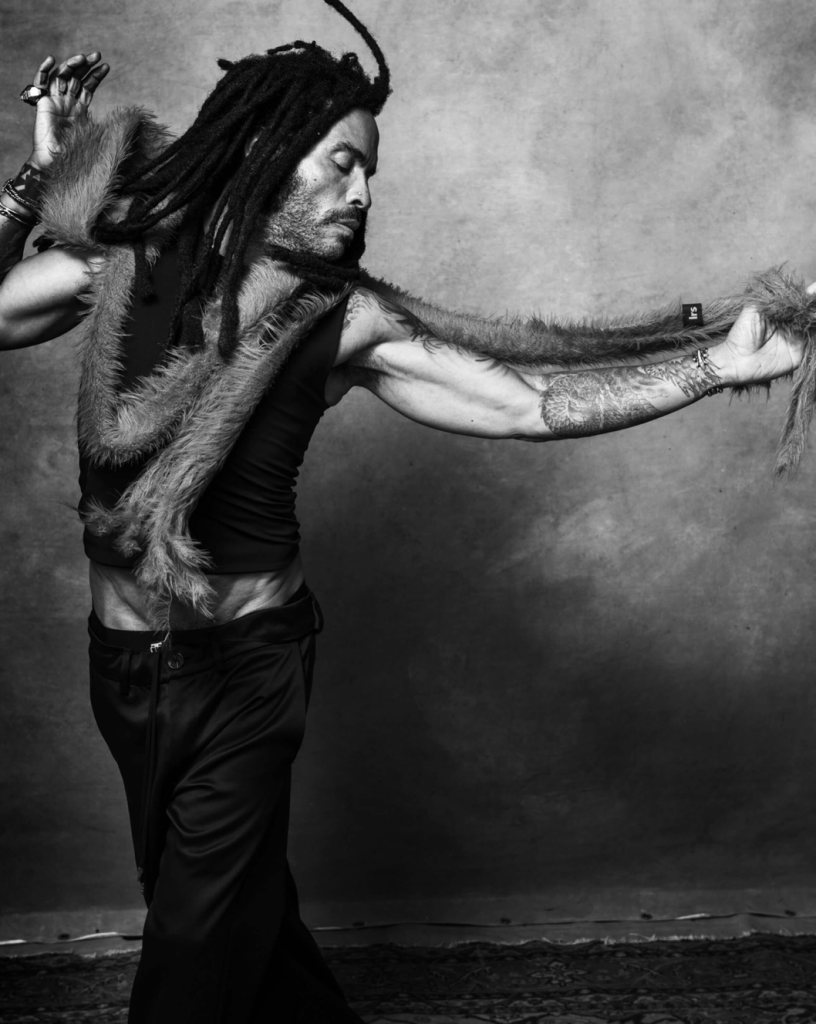
Kravitz showed up at his Bahamas home in March 2020 with enough clothes for a weekend. Two years into a three-year tour at the time, he thought he’d stop at the beach for a few days to recharge between runs of shows. But then the next leg got canceled. And the next. Kravitz stayed for the better part of the next two and a half years.
Musical inspiration finds him on Eleuthera, the island he calls home. He bought thirty acres when he signed his first record deal and for a long time lived in an Airstream on his own beach. He still has it, though he’s since built a proper house elsewhere on the property. There’s a garden out back where he grows his own fruits and vegetables. A studio nearby. “Shoes go out the window,” he says. “There’s no keys. No wallets. No money. You start to go with nature.” Kravitz is normally a night owl, going to bed around 5:00 in the morning and waking up at noon, but after a certain amount of time there he resets. Heads to bed shortly after dark, wakes up early.
During the longest stretch of stillness—of staying in one place—in his adult life, music poured out. At times he barely slept at all. Waking up at all hours, hearing melodies in his head, and racing to get them down. He had three separate albums in progress. It was chaotic and occasionally hard to organize. Harder still to finish. But as the world began to open and live shows returned to calendars, Kravitz tinkered away in the studio. Testing different arrangements, dialing up the drums, lowering the vocals. Mixing songs and then mixing them again—“a thousand times,” he says. “I kept polishing.”

He expects we’ll hear the two other sets, both mostly completed, someday. But the music on Blue Electric Light is what he’s feeling now, he says. “This one spoke to me.” He’ll devote the next six months to promotion, and then the next couple years to a world tour. He’s ready for all of that. Hungry, in fact. “This one has to come out.”
See full article on esquire.com
 HUNKS OVER 40
0 comments on “Rock Star Lenny Kravitz for Esquire US Dec 2023”